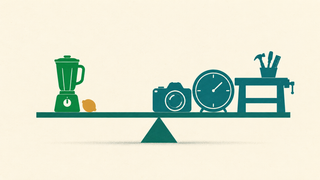
$50 of Props Did Not Make Blendtec's Viral Videos Cheap
Blendtec’s famous starting budget paid for props. A complete campaign budget also accounts for people, existing assets and distinct revenue streams.
Topic
Documented, source-checked breakdowns of how a company, product or founder reached a real milestone.
Blendtec’s famous starting budget paid for props. A complete campaign budget also accounts for people, existing assets and distinct revenue streams.

Debbie Sterling paired a construction kit with a storybook. The useful lesson is how to test the reason to build separately from the instructions.

Gradient designed a heat pump for existing windows. A New York housing pilot shows why installation, seasonal reliability and bill economics need separate gates.

NEMO redesigned its Forte sleeping bag around a simpler material family. The commercial promise also requires collection, sorting and an actual processor.

Steve Sando created a member group to answer recurring bean-cooking questions. Its useful lesson is to help buyers succeed before expecting them to recommend a product.
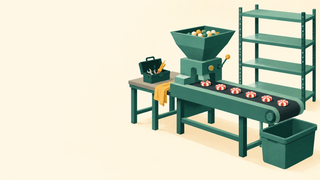
Berkshire kept See's Candies while redeploying surplus cash into other businesses. Its history offers a two-stage test for an owner's next acquisition.
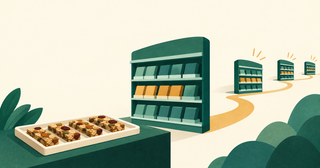
Lara Merriken did more than get LARABAR onto one shelf. She used sampling, movement data, and reorders to earn the next doors.
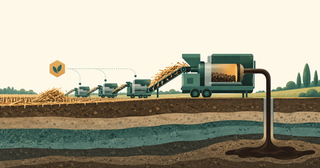
Charm Industrial's first customer bought an outcome before the process had scaled. The contract-to-machine bridge shows what an advance market can prove.
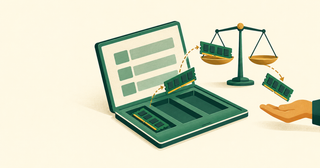
Framework faced a memory quote above twice its prior cost, changed preorders, then refunded buyers when supply got cheaper. Here is the reusable batch rule.
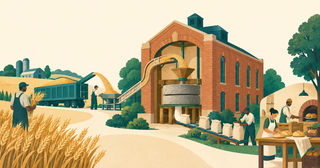
Maine had growers and bakers but lacked the processing link between them. Maine Grains shows how to test a missing-middle business before buying equipment.

David Barnett began with a phone case for storing earbuds, but users valued the grip. The product improved when observed behavior changed the specification.
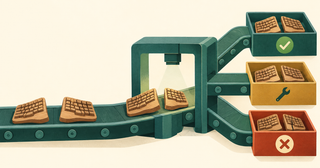
Keyboardio's maple enclosures made natural variation a production constraint. Its updates show how founders can set a quality gate before fulfillment.

Johnny Cupcakes made a T-shirt shop look and behave like a bakery. A scorecard separates memorable retail media from expensive scenery.

Liquid Death used a low-cost brand video and media test to attract distributors before it had cans, separating interest from factory commitment.
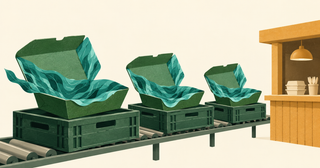
Notpla put a novel seaweed coating inside a familiar food container, reducing the behavior change required from restaurants and distributors.
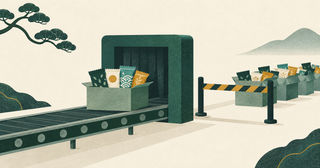
Bokksu used a tiny paying cohort to learn sourcing, packaging, international shipping and retention before one campaign tripled demand.

Ghia used restaurants and bartenders to show customers when and how to enjoy a nonalcoholic aperitif before trying to scale retail demand.

GameTank had a working console, enclosure and games, yet electromagnetic testing still controlled when the finished product could ship.
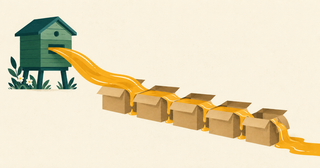
Flow Hive turned a modest tooling request into nearly 25,000 customer obligations. The launch succeeded faster than its original production plan could grow.

OpenFlexure makes low-cost microscopes from printable parts, but its deeper advantage is that nearby teams can build, modify and repair them.
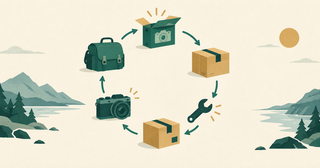
Peak Design repeatedly finances new physical products with customers. The model protects founder control only when fulfillment cash is kept separate.
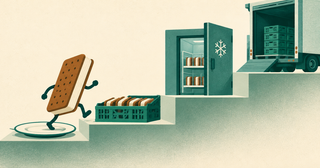
Nightingale expanded from a restaurant dessert to local shops, commissary production and national chains without skipping the operational steps between them.
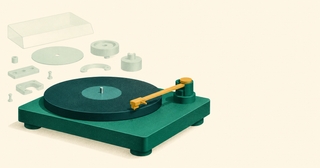
U-Turn Audio launched a deliberately simple record player, then invested in custom tooling only for the part most important to sound performance.
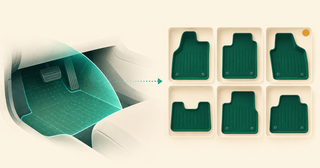
A floor liner must match one vehicle precisely. WeatherTech shows how tooling, compatibility data and returns can turn that complexity into a system.