
Vision Let a 3D Printer Stop Scraping Its Own Work
Optical feedback helped Inkbit and university researchers remove a resin-smoothing constraint. An interface map and finishing allowance connect that advance to a specific assembly decision.
Topic
Optical feedback helped Inkbit and university researchers remove a resin-smoothing constraint. An interface map and finishing allowance connect that advance to a specific assembly decision.
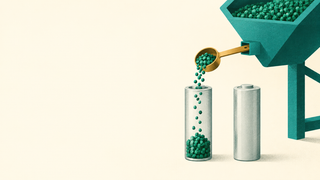
Sila sells silicon-carbon anode material, while its factory roadmap uses battery-energy units. A worked conversion shows which assumptions connect material output to usable cells.
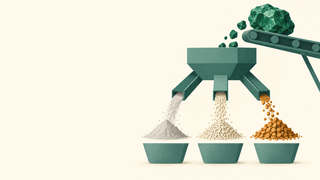
Brimstone plans to make cement, supplementary cementitious material and alumina from one rock feedstock. Each output still needs accepted quality, a buyer and a cash model.
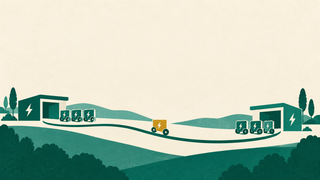
Revoy puts battery-powered drive units between diesel trucks and trailers. The commercial question is whether a repeat route can keep the units and swap stations working.

Niron’s GM partnership is a route into motor development. A four-state evidence ladder separates that opportunity from qualified, repeatable production supply.

Oxide sells an integrated rack of computers for a customer's own facility. The purchase decision spans capacity, physical access and operational responsibility.
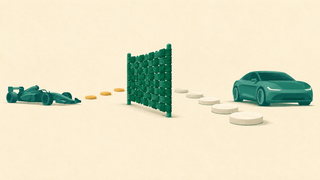
Bcomp’s racing and road-car work runs on different clocks. A two-row program calendar and funding-gap calculation show how to plan the interval.

Gradient designed a heat pump for existing windows. A New York housing pilot shows why installation, seasonal reliability and bill economics need separate gates.

NEMO redesigned its Forte sleeping bag around a simpler material family. The commercial promise also requires collection, sorting and an actual processor.
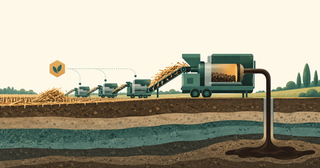
Charm Industrial's first customer bought an outcome before the process had scaled. The contract-to-machine bridge shows what an advance market can prove.

A phone campaign can prove demand before suppliers, certification, carriers, fulfillment, and support are ready. Light's updates reveal the missing system.
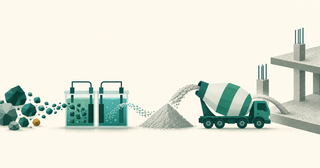
Sublime Systems is changing how cement is made while trying to keep concrete work familiar. Its harder challenge is an adoption system.
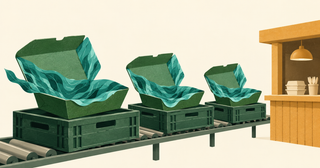
Notpla put a novel seaweed coating inside a familiar food container, reducing the behavior change required from restaurants and distributors.

OX Delivers lets small traders pay for a journey instead of financing an electric truck. The model works only when shared routes carry the asset cost.

Form Energy accepts lower round-trip efficiency to pursue very low-cost storage across long grid emergencies. It is built for a different job than lithium-ion.

OpenFlexure makes low-cost microscopes from printable parts, but its deeper advantage is that nearby teams can build, modify and repair them.

Zipline's aircraft matter, but regulation, retailer handoff, remote operations and site throughput determine whether delivery becomes a repeatable service.
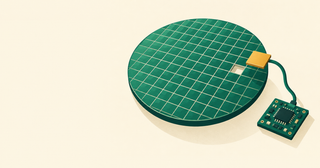
Tiny Tapeout combines many small circuit designs into one fabrication run, letting beginners buy a useful tile instead of funding an entire chip.