Peak Design has used crowdfunding repeatedly, not as emergency fundraising but as a product-financing system. Its first Capture camera clip raised $364,698 from 5,258 backers in 2011. The company says it has remained investor-free while returning to Kickstarter for successive product lines. That model can preserve founder control, but only when each campaign finances a clearly bounded product and the company reserves enough cash for fulfillment, warranty, and the ordinary business between launches. The applicable lesson is to treat preorder cash as restricted working capital. It is not profit and it is not safe to spend on unrelated growth until the promised product and its likely service cost are covered.
One campaign became a repeated operating process
Peter Dering designed Capture after finding existing ways to carry a camera awkward on a long trip. The 2011 campaign sought $10,000 and raised $364,698 over 75 days. That was 36 times the goal, but it was not the end of crowdfunding for the company.
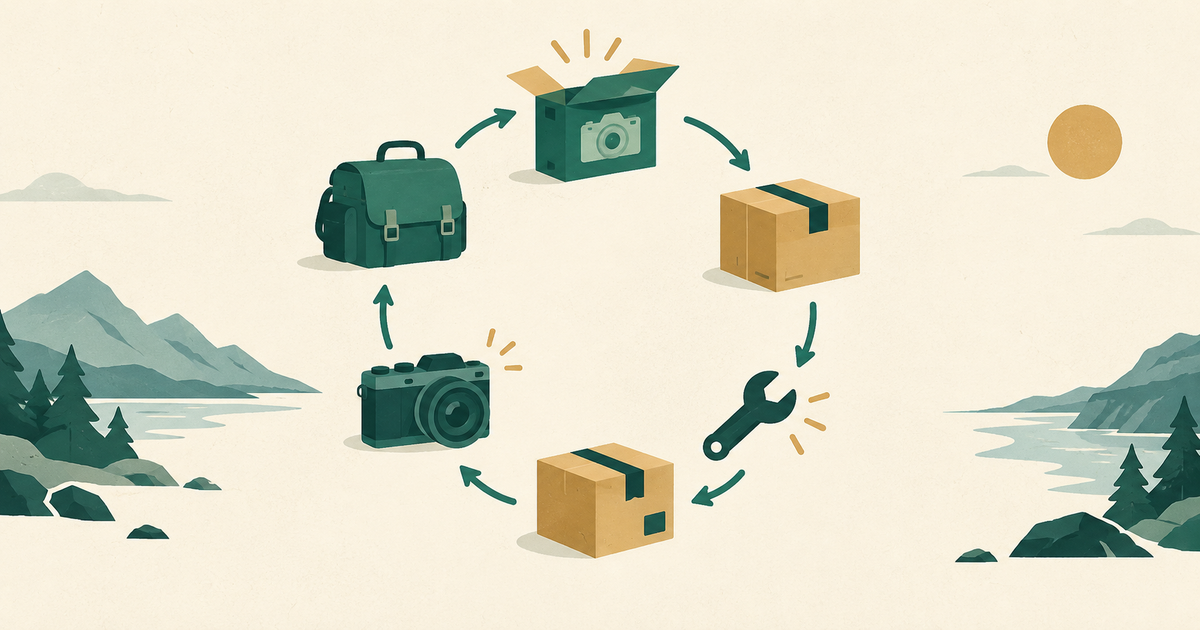
Peak Design's current history lists campaigns across clips, straps, bags, tripods, mobile accessories, motorcycle mounts, and luggage. The company describes itself as investor-free from the beginning. Repetition matters because a single campaign can be luck or novelty. A sequence can become a financing flywheel: delivered products create a customer base, the customer base reduces launch uncertainty, and the next campaign funds a new production cycle.
That does not make the cash free. Backers are unsecured customers waiting for a product. Every dollar arrives before the corresponding manufacturing, freight, duties, support, returns, and warranty work.
Create a preorder cash waterfall
Suppose a campaign collects $1 million. Platform and payment costs consume an illustrative 8 percent, leaving $920,000. Manufacturing deposits and balances require $420,000. Freight, duties, and fulfillment require $150,000. Expected support, replacements, and returns reserve require $70,000. Taxes and contingency require $100,000. Only $180,000 remains available for product development, payroll, or the next opportunity.
The headline is $1 million. The discretionary cash is 18 percent of that illustrative total. A founder who hires against the headline can be profitable on paper and unable to pay the factory balance.
| Cash layer | Illustrative amount | Release condition |
|---|---|---|
| Fees | $80,000 | Charged at collection |
| Production | $420,000 | Accepted finished units |
| Delivery | $150,000 | Backer receipt |
| Service reserve | $70,000 | Measured claim window |
| Tax and contingency | $100,000 | Liabilities known |
| Discretionary | $180,000 | All prior layers funded |
The percentages will differ by product. The order should not. Maintain separate ledger lines so preorder growth cannot disguise a shrinking delivery reserve.
Warranty converts past sales into future obligations
Peak Design also offers a lifetime warranty. Its published terms cover manufacturing defects and functional failures, while excluding cosmetic wear, misuse, and some other categories. It promises repair or replacement with a functioning item of the same or better condition.
That promise can increase trust in an expensive physical product, but it means old campaigns continue to affect current cash and inventory. A warranty reserve should be based on observed claim frequency, cost per resolution, product age, and whether repair is available. Do not copy a lifetime promise because it sounds premium. Copy it only if the product design, parts policy, margin, and records can sustain it.
An illustrative reserve formula is:
Units sold x expected lifetime claim rate x average resolution cost.
If 20,000 bags have an 8 percent expected functional claim rate and average repair or replacement cost of $42, the expected obligation is $67,200. A margin calculation that ignores it overstates the cash available to founders.
Control comes from a system, not the absence of investors
Investor-free financing can preserve voting control and reduce dilution. It also concentrates product, inventory, and reputation risk in the operating company. Backers do not absorb a failed production run the way equity investors absorb a portfolio loss. They expect delivery or a refund.
The wealth lesson is therefore broader than "avoid venture capital." Choose the capital source whose repayment behavior matches the uncertainty. Equity tolerates long technical uncertainty but dilutes upside. Debt preserves ownership but demands scheduled cash. Preorders preserve ownership and defer no customer obligation. Retained profit is slow but flexible.
This framework complements Trunki's control-versus-license decision. Peak Design demonstrates that control also depends on funding the production cycle without selling equity. It is closer to a revolving customer-financed inventory facility, except the cost includes delivery promises and trust.
Run a campaign solvency check in one hour
- Export collected pledges by reward and destination.
- Apply current factory, freight, duty, fulfillment, and payment costs to each reward, not one blended average.
- Add a claim reserve from the closest prior product or a conservative pilot assumption.
- Separate tax and contingency cash.
- Compare the remainder with payroll due before final delivery.
If any reward is negative after delivery, stop treating the campaign total as success. Requote the configuration, narrow destinations where permitted, or fund the gap explicitly. Do not use later campaign receipts to conceal an earlier shortfall. That converts a product flywheel into dependency on constant launches.
The readiness checklist in Ugmonk's preorder case helps before launch. The customer-source guide in Where First Customers Actually Come From helps recruit a category-specific base instead of buying broad attention.
Peak Design's durable achievement is not one oversized campaign. It is the repeated conversion of customer trust into new physical products while retaining ownership. Founders considering the model should copy the cash discipline first. A campaign protects control only when fulfillment and future service are already funded. Otherwise the apparent freedom is borrowed from customers and due on a fixed date.
Test whether the flywheel can coast
A healthy crowdfunding system should survive a year without a new campaign. Remove planned preorder receipts from the 12-month cash forecast. Can existing product contribution fund payroll, warranty, inventory replenishment, and ordinary product development? If not, launches are no longer optional financing events. They have become working-capital dependencies.
Track four balances separately: unfulfilled preorder cash, finished-goods inventory, warranty reserve, and unrestricted cash. A single bank balance hides the relationship. Review the balances weekly during fulfillment and monthly afterward. When a campaign closes, compare forecast with actual by reward and destination so the next waterfall uses evidence rather than optimism.
Also price management attention. A launch can raise cash while pulling engineers, customer service, and operations away from the installed product base. Count support tickets per 1,000 backers and hours spent on campaign communication. If a new launch delays warranty resolution, it weakens the trust needed for the next one. Repeated crowdfunding compounds only when past customers remain an asset rather than an unattended queue.
Run that no-launch forecast before approving the next campaign theme.
Customer funding protects independence only when today's excitement leaves enough cash to keep yesterday's promises.
Discussion
Sign in with Google or just a name. No email link, no password to remember.