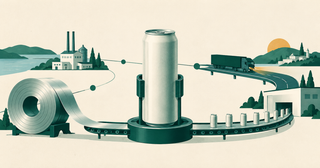
How a Beverage Company Keeps Its Famous 99-Cent Can Profitable
AriZona protects its recognizable 99-cent can through packaging, production speed, distribution choices and private ownership, not wishful pricing.
Topic
Documented, source-checked breakdowns of how a company, product or founder reached a real milestone.
AriZona protects its recognizable 99-cent can through packaging, production speed, distribution choices and private ownership, not wishful pricing.
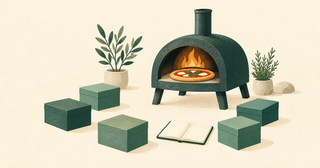
Ooni began with 142 crowdfunding backers and a manageable production run, leaving room to learn before thousands of customers depended on the product.
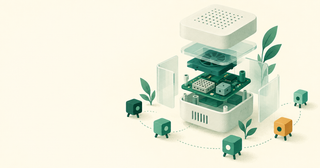
AirGradient publishes its monitor designs and still sells calibrated devices. Customers pay for execution, support, dependable sourcing and trust.
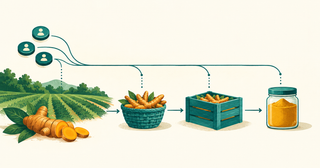
Diaspora Co. used customer preorders to fund a turmeric supply chain tied to harvest timing, quality selection and direct farm relationships.

Trunki makes ride-on suitcases for children. Founder Rob Law moved from a failed license to greater control of the brand, supply chain and production.
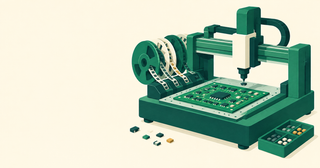
Opulo's desktop machine places electronic components on circuit boards. The break-even test includes setup fees, labor, delay and inventory risk.
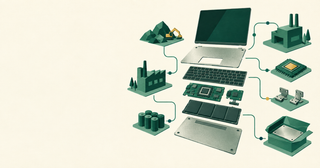
MNT Research names the companies making its laptop boards, body, hinges and cells, making the production bottleneck visible before customers wait.
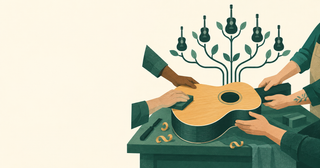
Taylor Guitars developed product leaders and managers before moving ownership to employees, separating founder succession from a competitor sale.
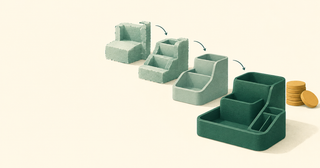
Ugmonk is a small design brand. It spent three years developing a desk organizer before crowdfunding tested whether buyers would finance production.
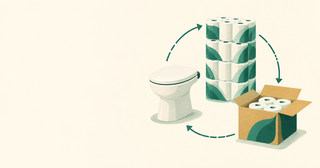
Who Gives A Crap needed $50,000 and its first thousand households. A founder stayed on a toilet until preorders funded production.
Tally gives away what competitors meter, converts about 2% of users to paid, and passed $5M ARR bootstrapped. The math only works because free users do the distribution.
Mike Perham has run Sidekiq alone since 2012: a free open source core, paid Pro and Enterprise tiers, and a no-discounts rule. Here is how the machine works.
Josh Pigford published every term of his Baremetrics exit: three payments, no earnout, a guaranteed $3.7 million, and two seed investors who agreed to walk away with nothing.
Ivan Kutskir worked 7,000 hours before Photopea earned a dollar. Now the free editor makes about $3 million a year, 90 percent from ads, on roughly $12,600 of annual costs.
Levels.fyi served millions of monthly visitors from a Google Form and a spreadsheet while its two bootstrapped founders reached a $2 million run rate. The order of operations is the lesson.
Cold LinkedIn messages went nowhere, so Alex West sold the list before it existed: ten customers at $29 within two weeks of a Product Hunt launch. The whole arc, from $87 on day one to a $53,700 peak and back down.
Chris Mondragon runs Queen Bee Cleaning past $1.5M a year with employees and a $4,200 monthly ad budget. Chris Schwab ran Think Maids to $60K a month from another continent. Both published their numbers.
lemlist started in 2018 with $1,000 and reached a $150M valuation without outside funding. Four times its founder traded short-term money for distribution, and the AppSumo deal shows the exact price.
Tony Dinh launched a ChatGPT frontend five days after OpenAI opened its API and published the revenue at every stage. The second million is coming from companies, not from the customers who built the first.

Frank published his 2022 template revenue line by line. The funnel was not his 2.9 million subscriber channel: it was 15 videos on a small tutorial channel and a free 42,000-word guide.

Bannerbear's founder recorded the flat 18 months as carefully as the good ones. The two changes that ended the flat line were a rebuild as an API and a price that went from $9 to $49.
Peter Askew won VidaliaOnions.com at auction in 2014, then found a Georgia farm to fill the orders. He grows nothing, ships nothing, and answers the phone three hours a day in March.

Better Sheets started as eight screen recordings made in a day, four of them free. The marketplace deal that took it from a dozen customers to more than a thousand is also its biggest risk.
Brett Williams sells design as a subscription with one request at a time and a 48-hour turnaround, alone. The price started at $449 a month in 2017 and took three years to pass $10k a month.