
LEGO Sold Its Theme Parks to Put Capital Back Behind the Bricks
LEGO's 2005 park sale separated brand affinity from the capital needed to run another business. An asset worksheet helps smaller owners examine the same tension.
Topic
Articles on the mechanics of earning online: what payment processors, platforms and payout rails really cost, how money gets held or lost in transit, and concrete paths from work to cash for freelancers and founders.
LEGO's 2005 park sale separated brand affinity from the capital needed to run another business. An asset worksheet helps smaller owners examine the same tension.
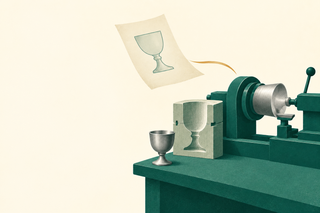
Danforth Pewter added established designs alongside equipment and training. A worked example shows why an acquisition price understates initial cash needs.

WD-40 outsources finished-goods manufacturing but still commits money to capacity. Its disclosures show how to map supplier promises before withdrawing cash.

Vitsœ used customer lending to help build a factory. The ownership benefit came with a repayment obligation that product loyalty could not erase.
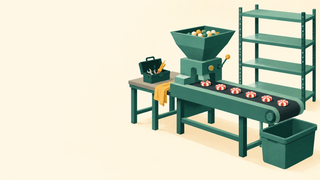
Berkshire kept See's Candies while redeploying surplus cash into other businesses. Its history offers a two-stage test for an owner's next acquisition.
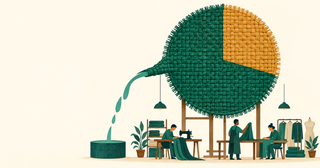
Eileen Fisher sold a minority stake to an employee ownership plan while retaining control. Four ledgers show what partial founder liquidity actually moves.
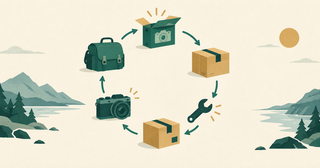
Peak Design repeatedly finances new physical products with customers. The model protects founder control only when fulfillment cash is kept separate.
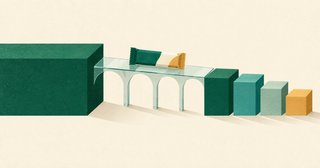
Kellogg paid $600 million for RXBAR, but enterprise value is not a founder's personal bank statement. A proceeds bridge explains the difference.
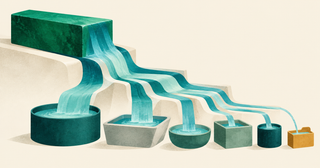
PepsiCo's $1.2 billion purchase of Siete was a company valuation, not a disclosed family payout. Ownership and deal terms determine the proceeds.
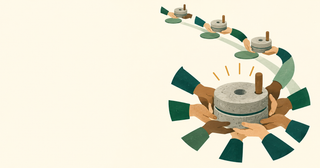
Bob's Red Mill is a flour and whole-grain company. Its decade-long employee-ownership transition shows the cash flow and management work an ESOP requires.
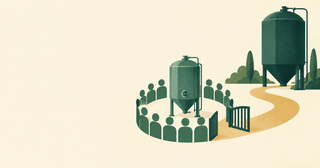
New Belgium Brewing shared financial value through employee ownership, then employees approved a sale. An ESOP did not permanently lock independence.
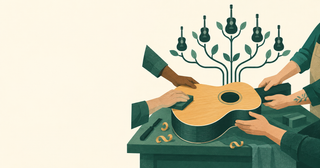
Taylor Guitars developed product leaders and managers before moving ownership to employees, separating founder succession from a competitor sale.
Stripe, PayPal and Square all keep the original processing fee when you refund a sale. The per-order numbers, what they do to your effective take rate, and when to refund instead of fighting.
OpenAI is not the merchant of record. You are, and the credential the agent hands your payment provider is single-use, scoped to one merchant and capped at the exact order total. That breaks several ordinary retail habits before it breaks anything else.
The fixed fee is identical on both rails, so the buy now pay later premium is exactly the difference in percentage rates: 3.09 points on Stripe, 1.50 on PayPal. One formula turns that into the extra orders per hundred you need before the button pays for itself.
The first Making Tax Digital for Income Tax quarterly update is due on 7 August 2026 for the period 6 April to 5 July. What the submission contains, why two income sources mean two submissions, and the calendar-quarter election that locks the moment you press send.
Stripe prices stablecoin payments at 1.5% flat against 2.9% plus 30 cents for a domestic card, so the rail is cheaper at every order value. Four documented limits decide whether you can use it at all.

Frank published his 2022 template revenue line by line. The funnel was not his 2.9 million subscriber channel: it was 15 videos on a small tutorial channel and a free 42,000-word guide.

Bannerbear's founder recorded the flat 18 months as carefully as the good ones. The two changes that ended the flat line were a rebuild as an API and a price that went from $9 to $49.

Better Sheets started as eight screen recordings made in a day, four of them free. The marketplace deal that took it from a dozen customers to more than a thousand is also its biggest risk.

Brett Williams sells design as a subscription with one request at a time and a 48-hour turnaround, alone. The price started at $449 a month in 2017 and took three years to pass $10k a month.

Damon Chen built Testimonial from the salvaged parts of projects that failed. The launch was a $199 lifetime deal to 30 people; the growth engine is a widget his customers put on their own sites.

No cohorts, no calls, no staff. Welsh wrote down the posting system he already ran and priced it for an instant decision. The audience underneath it took eight years.

Danny Postma wrapped a public image model around one job people already pay for. The programme that pays reviewers to recommend it brings in a reported $50,000 a month by itself.