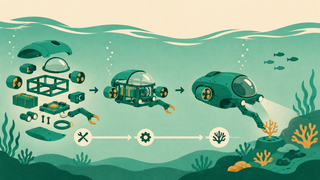
OpenROV Sold the Build, Then Sold the Finished Dive
OpenROV's kits and finished Trident served different buyers. The shift moved assembly, maintenance and support work back to the maker.
Author
Theo Lindqvist covers the tools and technology choices behind one-person products. Pen name; see our Editorial Policy.
OpenROV's kits and finished Trident served different buyers. The shift moved assembly, maintenance and support work back to the maker.

Looptworks works with textile waste that arrives in changing shapes and conditions. Its process suggests a practical intake gate before circular products are promised.

Foldscope separates a one-dollar parts goal from the cost of delivery and support. Its two-tier pricing suggests a practical access model.

DockFrame turns Framework Expansion Cards into a modular desk hub. A slot-by-slot budget shows when flexibility saves money and when it merely moves the purchase.
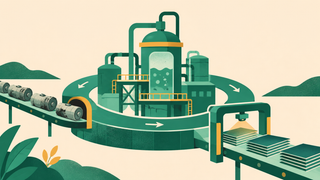
Redwood Materials closes loops only after recovered matter becomes qualified output. Map installed, qualified and sold capacity separately.
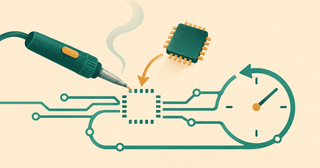
Solder Ninja Pen was nearly ready for production when key chips disappeared. Its redesign history offers a practical way to price component substitution.
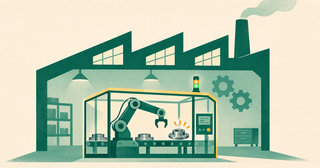
Hadrian is embedding automated production cells inside a Lockheed Martin plant. The move changes the unit sold from parts to committed capacity.

ZBiotics used 10,000 personally distributed samples to learn how buyers reacted to a proudly GMO product. The tactic works only with a disciplined learning ledger.

PocketBeagle 2’s processor changed between revisions without an extra board charge. A configuration record keeps that welcome upgrade explicit.
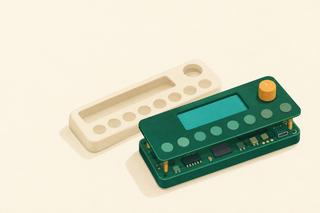
Teenage Engineering placed sensitive parts beneath a synthesizer’s display and sold the bare board as the instrument. An enclosure decision still has to account for protection and support.
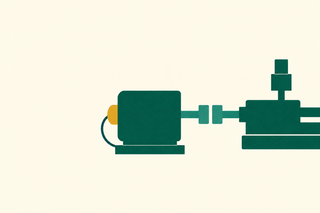
Mechaduino adds shaft feedback to a stepper motor. The useful engineering question is which errors remain beyond the point being measured.

Opentrons Flex uses liquid-specific transfer settings as well as modular hardware. A requirements map and first-week versus repeat-week model help scope a useful adoption test.

Optical feedback helped Inkbit and university researchers remove a resin-smoothing constraint. An interface map and finishing allowance connect that advance to a specific assembly decision.
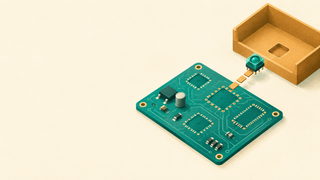
Little Bee’s production notes show how a supplier assurance can stall before an accepted order. A purchasing evidence ladder and fallback model make the risk visible.

Packsize converts folded corrugated material into boxes near the order. The useful comparison includes inventory, packing work and the costs that smaller boxes actually change.

Sila sells silicon-carbon anode material, while its factory roadmap uses battery-energy units. A worked conversion shows which assumptions connect material output to usable cells.

Brimstone plans to make cement, supplementary cementitious material and alumina from one rock feedstock. Each output still needs accepted quality, a buyer and a cash model.
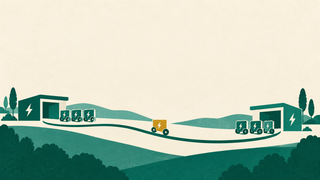
Revoy puts battery-powered drive units between diesel trucks and trailers. The commercial question is whether a repeat route can keep the units and swap stations working.

Oskitone designed its Scout synthesizer for people learning electronics. It left out controls to simplify assembly and explanation while preserving a later modification path.

Niron’s GM partnership is a route into motor development. A four-state evidence ladder separates that opportunity from qualified, repeatable production supply.

Oxide sells an integrated rack of computers for a customer's own facility. The purchase decision spans capacity, physical access and operational responsibility.

Blue Robotics replaced a sealed motor arrangement with a flooded design. Its development story shows how architecture changes assembly cost and customer obligations.
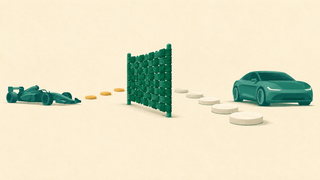
Bcomp’s racing and road-car work runs on different clocks. A two-row program calendar and funding-gap calculation show how to plan the interval.

Gradient designed a heat pump for existing windows. A New York housing pilot shows why installation, seasonal reliability and bill economics need separate gates.