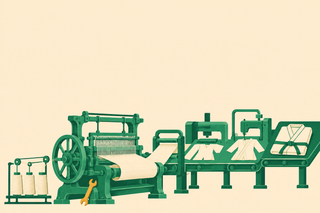
A Copied Jiu-Jitsu Uniform Pushed Origin to Rebuild the Factory
Origin's founder reacted to copied designs by rebuilding manufacturing capability in Maine. The practical lesson is to integrate one costly dependency at a time.
Author
Leo Marchand is the pen name of Margin's founding editor - a software builder and operator writing about technology, business, and earning money online. Sourcing and corrections: see our Editorial Policy.
Origin's founder reacted to copied designs by rebuilding manufacturing capability in Maine. The practical lesson is to integrate one costly dependency at a time.
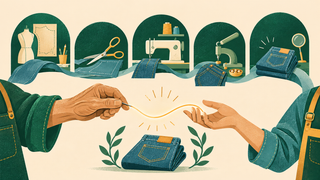
Hiut Denim built around Cardigan's surviving jeans expertise. A skill-capacity map shows where heritage ends and factory planning begins.
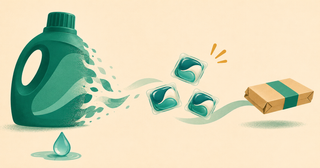
Dropps adapted dissolvable unit-dose technology to laundry and moved from store shelves to direct shipping. The channel worked because the product changed first.
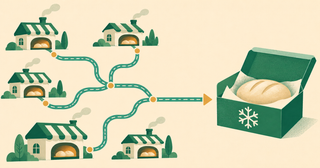
Wildgrain standardized par-baked frozen bread across more than 45 partner bakeries. The model works only if forecasts make local capacity dependable.
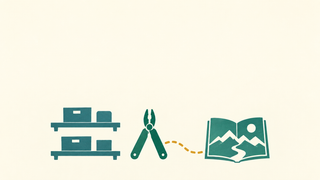
Tim Leatherman struggled to place his pliers-based pocket tool inside existing categories. An outdoor catalog offered a different route to an actual order.

Melissa Bernstein described choosing creative leadership while Doug ran their later company. Use their role division to identify decisions a founder can transfer.
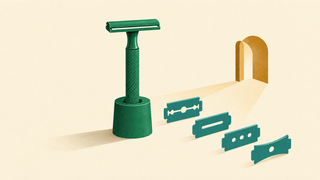
Henson sells a machined razor that accepts standard blades. Its design choice makes first-order contribution more important than hoped-for refill revenue.

Oru solved kayak storage, then changed its folding pattern to simplify ownership. A practical map helps founders find friction outside a product’s main use.

Lush credits Mo Constantine and Stan Krysztal with an early solid-shampoo experiment. Changing the product's form also changes the work around it.

Debbie Sterling paired a construction kit with a storybook. The useful lesson is how to test the reason to build separately from the instructions.
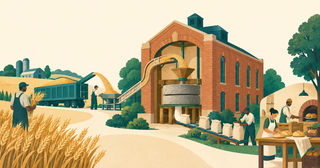
Maine had growers and bakers but lacked the processing link between them. Maine Grains shows how to test a missing-middle business before buying equipment.

David Barnett began with a phone case for storing earbuds, but users valued the grip. The product improved when observed behavior changed the specification.
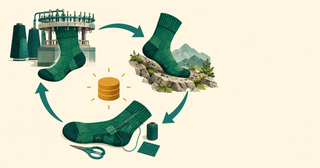
Darn Tough links its lifetime sock guarantee to in-house manufacturing, premium pricing and feedback from every returned pair.
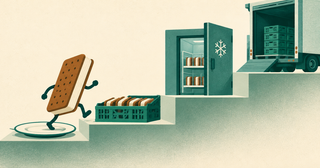
Nightingale expanded from a restaurant dessert to local shops, commissary production and national chains without skipping the operational steps between them.
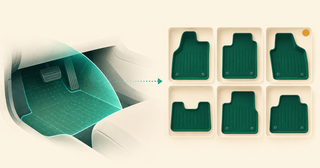
A floor liner must match one vehicle precisely. WeatherTech shows how tooling, compatibility data and returns can turn that complexity into a system.
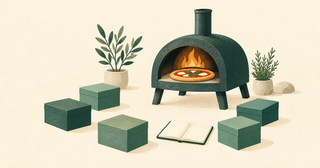
Ooni began with 142 crowdfunding backers and a manageable production run, leaving room to learn before thousands of customers depended on the product.
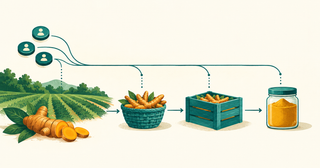
Diaspora Co. used customer preorders to fund a turmeric supply chain tied to harvest timing, quality selection and direct farm relationships.

Trunki makes ride-on suitcases for children. Founder Rob Law moved from a failed license to greater control of the brand, supply chain and production.
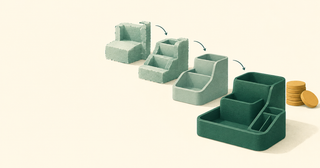
Ugmonk is a small design brand. It spent three years developing a desk organizer before crowdfunding tested whether buyers would finance production.
Josh Pigford published every term of his Baremetrics exit: three payments, no earnout, a guaranteed $3.7 million, and two seed investors who agreed to walk away with nothing.
lemlist started in 2018 with $1,000 and reached a $150M valuation without outside funding. Four times its founder traded short-term money for distribution, and the AppSumo deal shows the exact price.

Brett Williams sells design as a subscription with one request at a time and a 48-hour turnaround, alone. The price started at $449 a month in 2017 and took three years to pass $10k a month.

Pete Codes published every dollar No CS Degree earned, including the year it lost money. The site was never the business: it was six years of proof that sold something else.

For tax years beginning after 2025 the nonemployee compensation reporting threshold is $2,000, not $600. What that changes, the four things it does not, and the 24% arithmetic behind the form everyone skips.