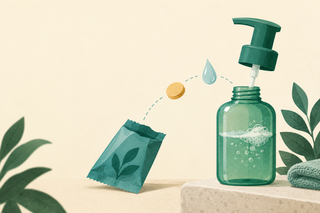
The Soap Arrives Dry. The Customer Adds the Water.
Blueland sells hand soap as a tablet customers dissolve at home. That format changes shipping and packaging, while making first-use instructions part of the product.
Author
Dana Whitfield writes about operating small businesses: customers, processes, and the decisions that keep companies alive. Pen name; see our Editorial Policy.
Blueland sells hand soap as a tablet customers dissolve at home. That format changes shipping and packaging, while making first-use instructions part of the product.

LEGO's 2005 park sale separated brand affinity from the capital needed to run another business. An asset worksheet helps smaller owners examine the same tension.

Nikwax separates cleaning from renewing a water-repellent finish. Its instructions suggest a useful aftercare workflow: diagnose the stage before offering another product.

Cometeer moves coffee brewing upstream and ships frozen portions. A dispatch model shows the tradeoff between shipment costs, household consumption and the remaining cold-storage job.

Carrie Sundra explained why a cheaper manufacturing run could still leave her unpaid. Separate parts discounts, assembly costs and cash recovery before ordering.
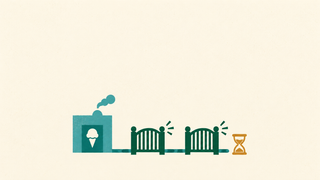
Jeni's halted production again soon after reopening in 2015. Its experience shows why a recovery budget needs cash for continued interruption as well as repairs.

Danforth Pewter added established designs alongside equipment and training. A worked example shows why an acquisition price understates initial cash needs.

Niche’s home-grinder brief focused on small doses and retained coffee. Three measurements show how founders can turn a complaint into an honest product test.

Dippin’ Dots expanded from frozen treats into industrial cryogenics. A capacity calculation shows why a new process customer needs a separate commercial test.

Rubies in the Rubble began with rescued market produce. Scaling required a choice about suppliers, outsourced production and which parts of the mission to retain.
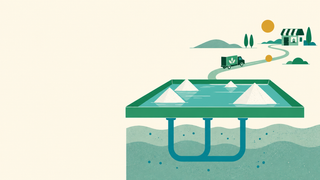
Saltverk makes sea salt with geothermal heat in Iceland’s Westfjords. Its model shows why a cheap production input must be weighed against logistics and operating costs.
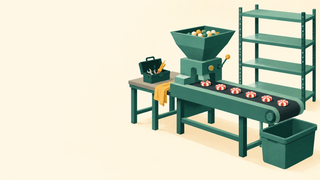
Berkshire kept See's Candies while redeploying surplus cash into other businesses. Its history offers a two-stage test for an owner's next acquisition.
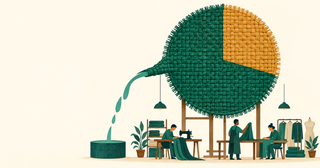
Eileen Fisher sold a minority stake to an employee ownership plan while retaining control. Four ledgers show what partial founder liquidity actually moves.
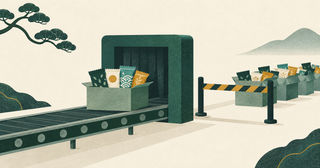
Bokksu used a tiny paying cohort to learn sourcing, packaging, international shipping and retention before one campaign tripled demand.
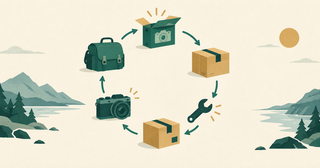
Peak Design repeatedly finances new physical products with customers. The model protects founder control only when fulfillment cash is kept separate.

Kellogg paid $600 million for RXBAR, but enterprise value is not a founder's personal bank statement. A proceeds bridge explains the difference.
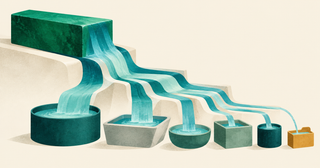
PepsiCo's $1.2 billion purchase of Siete was a company valuation, not a disclosed family payout. Ownership and deal terms determine the proceeds.

Bob's Red Mill is a flour and whole-grain company. Its decade-long employee-ownership transition shows the cash flow and management work an ESOP requires.

New Belgium Brewing shared financial value through employee ownership, then employees approved a sale. An ESOP did not permanently lock independence.

Taylor Guitars developed product leaders and managers before moving ownership to employees, separating founder succession from a competitor sale.
Tally gives away what competitors meter, converts about 2% of users to paid, and passed $5M ARR bootstrapped. The math only works because free users do the distribution.
Chris Mondragon runs Queen Bee Cleaning past $1.5M a year with employees and a $4,200 monthly ad budget. Chris Schwab ran Think Maids to $60K a month from another continent. Both published their numbers.
Classic plans keep the old feature set at the old price: 59.99 pounds a year against 84.99 for Personal. Microsoft does not document a route to them. What two regulators say happened, and the renewal audit to run.
The FTC wrote to seven companies on 6 July over Made in USA claims, three months after settlements of $625,000, $167,743 and $75,000. The standard is stricter than most sellers assume, and the fix is usually a rewrite, not a resourcing project.