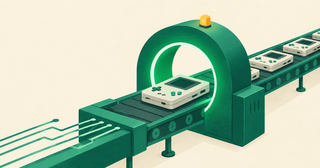
The Compliance Test That Delayed a Small 8-Bit Game Console
GameTank had a working console, enclosure and games, yet electromagnetic testing still controlled when the finished product could ship.
Topic
Articles on the tools and platforms that change the economics of building software: AI tooling and its real costs, infrastructure choices for small teams, and what new technology actually means for a builder's bottom line.
GameTank had a working console, enclosure and games, yet electromagnetic testing still controlled when the finished product could ship.

Flow Hive turned a modest tooling request into nearly 25,000 customer obligations. The launch succeeded faster than its original production plan could grow.

Form Energy accepts lower round-trip efficiency to pursue very low-cost storage across long grid emergencies. It is built for a different job than lithium-ion.

OpenFlexure makes low-cost microscopes from printable parts, but its deeper advantage is that nearby teams can build, modify and repair them.

U-Turn Audio launched a deliberately simple record player, then invested in custom tooling only for the part most important to sound performance.

Zipline's aircraft matter, but regulation, retailer handoff, remote operations and site throughput determine whether delivery becomes a repeatable service.
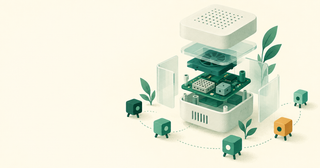
AirGradient publishes its monitor designs and still sells calibrated devices. Customers pay for execution, support, dependable sourcing and trust.
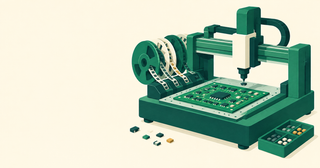
Opulo's desktop machine places electronic components on circuit boards. The break-even test includes setup fees, labor, delay and inventory risk.
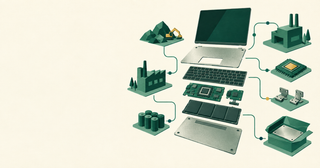
MNT Research names the companies making its laptop boards, body, hinges and cells, making the production bottleneck visible before customers wait.
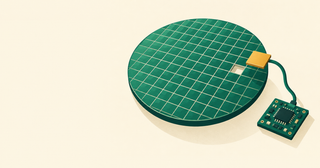
Tiny Tapeout combines many small circuit designs into one fabrication run, letting beginners buy a useful tile instead of funding an entire chip.
Mike Perham has run Sidekiq alone since 2012: a free open source core, paid Pro and Enterprise tiers, and a no-discounts rule. Here is how the machine works.
Ivan Kutskir worked 7,000 hours before Photopea earned a dollar. Now the free editor makes about $3 million a year, 90 percent from ads, on roughly $12,600 of annual costs.
Levels.fyi served millions of monthly visitors from a Google Form and a spreadsheet while its two bootstrapped founders reached a $2 million run rate. The order of operations is the lesson.
AJ built Carrd alone, priced Pro at $19 a year, and passed $1M ARR with zero paid advertising. The cheap price is the strategy, and it only works in one specific configuration.
Tony Dinh launched a ChatGPT frontend five days after OpenAI opened its API and published the revenue at every stage. The second million is coming from companies, not from the customers who built the first.
A misconfiguration left evaluation machines with live internet access, and two organisations both believed they were isolated. Outbound isolation is testable in under a minute, and most teams have never run the test.
GitHub put stacked pull requests into public preview on 30 July. Here is the install and command sequence end to end, what merging a middle pull request actually does, and the cross-fork restriction that rules the feature out for most open source work.
Amazon Threat Intelligence linked four npm compromises to a single state-backed actor, all of them starting with a socially engineered maintainer. The defence is not a scanner: it is four documented npm config options, and each one has a cost worth naming.
A benchmark put policy documents of 20 to 124 pages in front of thirty model configurations and graded 824 rules programmatically. The best configuration satisfied every rule in 36.2% of trials. Sort your own rules into advisory and binding, then move the binding ones out of the markdown.
The documented ceilings: 300 seconds on Vercel Hobby, 900 on AWS Lambda, 30 seconds of CPU by default on a paid Cloudflare Worker. Here are all four side by side, the run length that picks your runtime, and the request shape that makes the ceiling stop mattering.
OpenJDK's interim policy bans model-generated content in code, email, wiki pages and issues, while permitting private use for debugging. QEMU, Gentoo, NetBSD and Apache each drew the line somewhere else, and the reason is provenance rather than quality.

Shared conversations and Artifacts turned up in search results this week. On a domain you do not own you cannot set a noindex tag, which leaves exactly two levers. Here are the operators to run and the revoke path for each surface.

Hugging Face says the intrusion started in a dataset loader and that public models are clean. The useful response is not panic: it is pinning every download to a full commit hash, scoping tokens per app, and refusing pickled weights.

The 2026-07-28 revision removes initialize, the Mcp-Session-Id header and stream resumability, and makes server/discover mandatory. What replaced each of them, and the order to work through your own server.